In 2019, Clube de Regatas do Flamengo, Brazil's most popular football club, had a banner year. Under the guidance of Portuguese manager Jorge Jesus, the team shattered records and trounced the competition, winning the brazilian league on a record 90 points. It also won the Copa Libertadores, South America's most important club football tournament, for the first time since 1981, beating Argentinian side River Plate in dramatic fashion for a come from behind win. With that feat it also became the first Brazilian team since Santos in 1963 to win both the domestic league and the Copa Libertadores in the same year. Flamengo was so successful under Jesus' one year tenure as its head coach that the team won more titles (five) than it had defeats (four). Following an intense 4-4 draw against Vasco da Gama, Flamengo's main rival, that featured two lead changes and a stoppage game goal that just prevented the team from winning yet another game, forward Bruno Henrique came up with a statement that went viral among fans to describe the team's dominance, claiming Flamengo was "on a whole different league" (Portuguese: "em outro patamar"), highlighting the gap between the two rivals, given that Vasco da Gama fans were celebrating simply the fact that their team had not lost that game, considering how unstoppable Flamengo was at that time.
Such massive success led to a just as massive greed and attempts to capitalize on it for profits and political gains. As the team's historical run went on, Flamengo's board of directors got increasingly closer to the administration of far-right brazilian president Jair Bolsonaro. The president and other government officials were spotted attending Flamengo games wearing the team's jersey. Government officials were given honorary titles by the club. When Brazilian football was suspended following the escalation of the COVID-19 pandemic, Flamengo was the one lobbying the most for the games to restart. But nothing exemplifies the almost symbiotic relationship between Flamengo and the Brazilian government than "Provisional Mesure 984". In Brazilian law, a provisional measure is an emergency presidential decree that instantly becomes a law, but only for a period of 60 days (renewable for an extra 60). During that time, it must be appreciated by Congress and takes priority over other bills. If Congress doesn't approve it before its expiration, it's automatically revoked. This bill, which changed the way broadcasting rights were sold in brazilian football, was drafted with the massive help of Flamengo's president, Rodolfo Landim, to a point it was dubbed "Flamengo's Provional Measure". It would massively increase the bargain power of the most popular clubs to negotiate broadcasting rights, in detriment of smaller clubs, whose games have less demand. Considering the fact Flamengo is the club with the most fans in Brazil, it would massively increase their gap in money earned from broadcasting rights compared to other clubs, essentially allowing the team to monopolize brazilian football. The bill ultimately died in Brazil's Congress, but not before becoming the poster child of how Flamengo turned itself into the "government's official team". Worse, a far-right government, despite the team's fan base largely coming from a working class background and always being proud of such origins, to a point many fans have distanced themselves from the club.
Two paragraphs in and after such long introduction, you the reader may be asking: what does a Brazilian football team have anything to do with the world of Korean pop music? The answer is quite simple. There is a record label that's doing exactly the same, riding an immense wave of success and achievements to push government officials to give them exactly what they wanted and monopolize the field they are part of. That company is none other than Big Hit Entertainment, home of BTS, the biggest current phenomenon in the Korean pop music scene.

On November 20th, which happened to be the same day BTS released its most recent album, "Be", the Defense Committee of Korea's National Assembly approved a bill to change the country's laws regarding military enlistment, which amends the country's Military Service Act with a provision that allows for "exceptional artists in pop culture, who helped elevate South Korea's reputation around the world, the right to defer their military duties until the age of 30". According to current enlistment laws, every physically able korean men must enlist in the military at any time between 18 and 28 years of age, and serve in the military for somewhere between 18 and 24 months. The law came in force as a consequence of the Korean War of 1950-53, which separated the Korean peninsula into two countries, one communist in the North and one capitalist in the South. Technically, the conflict never had a formal ending, as the South refused to sign the armistice, meaning the two countries remain at war to this day, with large active military contingents, as a consequence Korea is one of the few places that still has ongoing conscription.
Very few people manage to get an exemption from mandatory enlistment. For athletes, the person must either win an Olympic medal of any type or win a gold medal at the Asian Games (the main multi-sports competition of the continent). For musicians, the only ones who managed to get exemptions are classical musicians. Pop idols never did. The past 25 years have seen a plethora of popular boy bands in Korea, from H.O.T to Bigbang, from Super Junior to Exo, but none of them managed to escape the inevitable enlistment time. But now, BTS is the one on the clock, and the group's popularity and the many parts involved, from different government ministries (Defense, Culture), to both Big Hit Entertainment but also its rival labels, the National Assembly, the media and even the president himself, means their turn to serve is setting up to become the most contentious battle over enlistment laws Korea has ever seen.
The situation for BTS is the following: the group's oldest member, Jin, turns 28-years old in December 5th of this year. That essentially means he has one year left at best to decide to take the call to enlist. It's not uncommon for members of popular groups to wait until the last second to enlist, Exo's leader Suho enlisted this year on May 14th, just 8 days before his 29th birthday. It definitely could be the case for Jin and he wouldn't be breaching any laws if he, let's say, enlists on December 4th of the next year (the day before he turns 29). However, Big Hit Entertainment has adopted a very defensive posture regarding the issue. On the company's registration for its Initial Public Offer, it quickly stated that Jin can delay his enlistment until the end of 2021, that's indeed correct, but shows the company is essentially dictating where they want him to enlist, which is, in spite of how controlling of their idols labels can be, something that usually doesn't happen. Big Hit's CEO Bang Si-Hyuk and Jin himself have relied on generic statements to dodge the question. Bang, when asked by the Hollywood Reporter, said that "the company believes military service is a duty, and we will try to show the fans the best of BTS until, and after, the members have fulfilled their service duties". On the group's press conference for its most recent album, Jin stated that he will serve, on his own words, "when the country calls", "when the time comes". However, that leads to some questions: what if the country never calls? What if such time never comes? And when the statements don't match the current events, they must be asked.
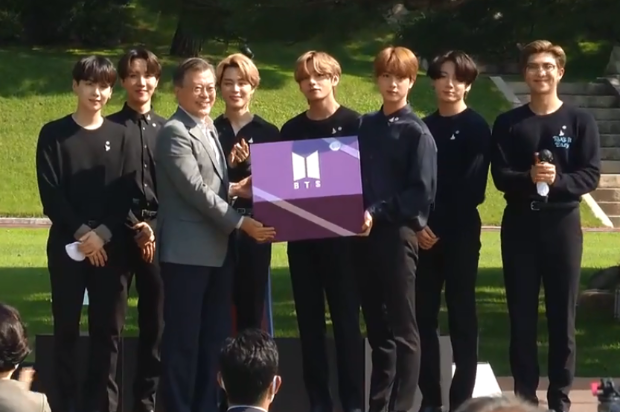
The bill is also very tricky when it comes to the possibility for other artists to ask for such delay, because BTS will be the measuring stick they will be up against. Let's give an example: could Exo member Baekhyun, who is also on enlistment clock (he already turned 28 and has until next May to enlist) ask for a delay because he has become the first Korean soloist in 19 years to sell 1 million copies in one album? He definitely could, he was also the first person since Seo Taiji to become a million seller both as a soloist and as part of a group. Sounds nice, doesn't it? But would the public react well if he asked? The answer is an easy no, because his achievements would be directly compared to BTS, and he can't win that battle. Sure he is the first million seller soloist in two decades, but you can argue that is because no BTS member has released a solo album, only mixtapes, and according to the last Gallup survey of most popular idols, six BTS members got more votes than Baekhyun. Sure, him and Exo are million sellers, but BTS had the first album in Korea to ever surpass 4 million sales. It's a losing proposition and for sure both him and his label know that, meaning in the end he will enlist when it gets close to the deadline. Nobody wants to poke the bear and be the next target of anti-idol sentiment in Korea, which has been particularly strong among the public the past couple years, with the notable exception being BTS, who are considered to be beyond idols.
The truth is, the Korean entertainment industry, and by default, the Ministry of Culture, Sports and Tourism, which oversees it, is between a rock and a hard place. In one hand, they have BTS as a powerful tool of spreading the country's soft power worldwide and as a source of revenue, therefore need to do everything to keep the group intact at all costs. On the other hand, the average idol, to the Korean public, is increasingly becoming a nobody, as the popular idols of the past move to stuff such as acting, modelling, commercials, variety or even solo music careers, moving away from their early days when they started as member of groups, but the newer ones can't emerge and replace them among the general public. Second generation idols have long moved past their initial career, third generation idols are on their last days of doing group related activities, as most main groups from this generation are 4 to 6 years old, beyond their rookie days, but fourth generation idols remain anonymous to the public, as no idol who has debuted after 2016 has made to the top 20 idols list Gallup annually publishes and that's not likely to change in 2020. The lack of new groups breaking out has led to stories of success coming from groups who are five years old already. Essentially the structure of the industry has never been so unequal, with one group getting essentially all the attention, its fellow label sidekicks sharing some scraps of its success by virtue of being BTS labelmates and everybody else is a loser, with no awards, no recognition, no public support and increasingly confined to their own fan bases, hoping to score a hit that might give them some months of fame to get an extra income before fading to irrelevance. Even the groups of the now archaic Big 3 companies have become subject to this cycle, as their oligopoly gives way to Big Hit Entertainment's monopoly.
But the higher ups have made their choice and it's only BTS and, by default, the Big Hit monopoly. In the past, SM Entertainment used to have the closest relationship with the Korean government, who still has its pension fund as an owner of a 8.5% stake on the company. These days are gone. Just like Flamengo in Brazil has made a big effort to establish a symbiotic relationship with the Bolsonaro administration and become a propaganda tool for the brazilian federal government, Big Hit Entertainment is doing the same towards the Moon Jae-In adminstration (and potential future administrations) and turning itself into the sole content creator of Korean music (and not just pop music, but also rap, indie, rock and other genres) and spreader of the country's soft power, craving for the illusion of a western validation BTS provides them and that many others chase in vain. If two years ago the rules to revise enlistment for idols were being introduced by representatives from small political parties, today they are being introduced by a representative from the ruling political party. The group has also essentially acted as a business representative for the Korean government, and there is nothing highlighting this special relationship better than the group's performance in Saudi Arabia, booked by the president himself following the signing of bilateral agreements between the two countries, in spite of Saudi Arabia's egregious abuses towards certain groups of people, especially women, who made the bulk of BTS' fan base.
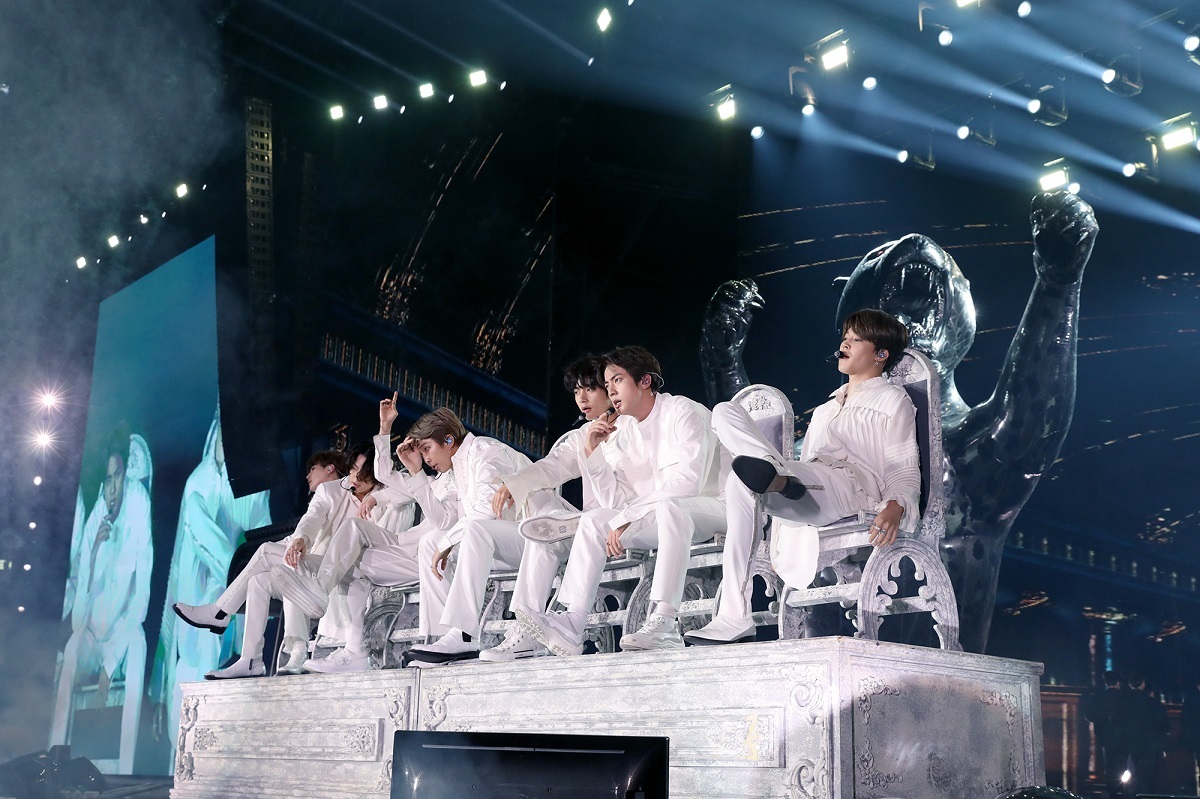
And make no mistake, if there is one thing lobbyists and special interests can do towards a law is stretching it and amending it for maximum profit. When Jin approaches 30 years old, is there any guarantee that the law won't just be amended to allow him and his group mates to postpone enlistment until they are 32? And then until 35, 40. Or even a full exemption. Meanwhile, the average Korean has to essentially take a 18 to 24 month break from its normal life due to a war that has officially never ended because he doesn't have a fan base to mass buy his song to a point it'll top the charts in the United States. Big Hit knows it needs to capitalize on its current wave of success from BTS to become the dominant force in the Korean music industry, and needs to extend that wave as much as it can. It's been buying other labels left and right, first longtime partner Source Music, home of girl group Gfriend, then it bought a majority of Pledis Entertainment shares, bring Seventeen, the 2nd boy band in sales only below Big Hit's own BTS. Last week, it acquired KOZ Entertainment, the label of popular korean hip-hop artist Zico. It also started trading its stocks on the market and plans to flood the k-pop market with as many groups as possible, using the BTS hype to funnel fans onto them while stffling competitors on its way to become a monopolistic force in the idol market, all because one of their idol groups happen to not be seen that way.
In conclusion, it's official, Big Hit Entertainment is slowly turning into the "government's company" and, as a consequence, BTS is becoming the "government's group". The interests of the Big Hit and BTS combo are now akin to the national interests of Korea as a country. The line between public and private has once again been blurred by the power of money and special interests. And the pressure on government officials will only increase now that the group landed its first major Grammy Award nomination. Expect the calls for exemption to only grow louder.


No comments:
Post a Comment